Is a rear extension worth it in Manchester?
Moving versus extending, what affects the cost, how to check your street's ceiling price, and when an extension might not be the right call.
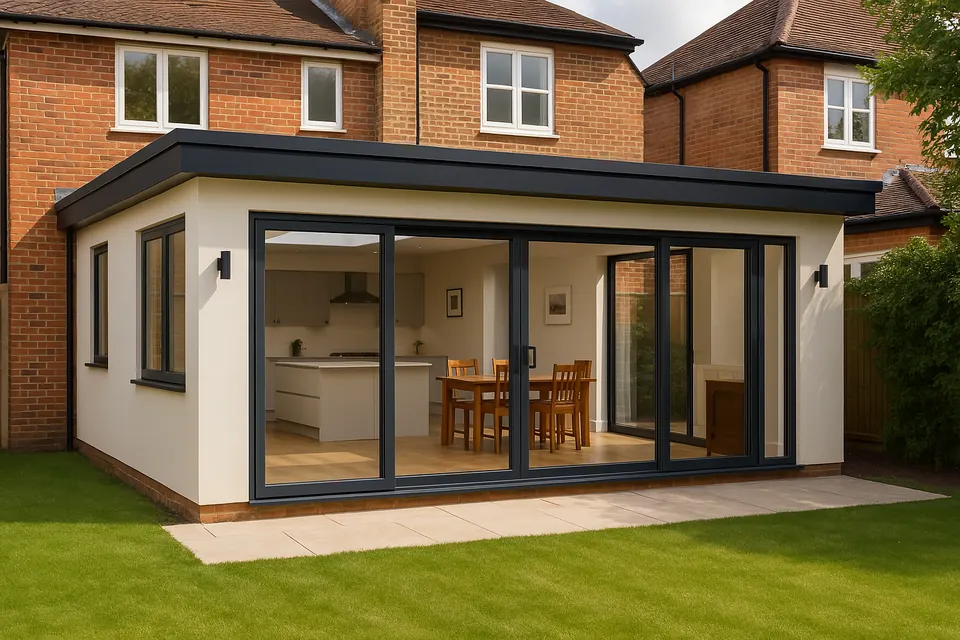
A rear extension is the most popular home improvement we build in Manchester. For most families it is a great investment, but not for every house or every budget. Here is an honest look at when a rear extension is worth it, and when it might not be.
Why so many Manchester homeowners extend
Moving house is expensive. Stamp duty, estate agent and solicitor fees, surveys, mortgage costs and removals can easily add up to many thousands of pounds, and none of that money improves the home you end up in. An extension puts your budget into bricks, glass and space you will actually use.
Staying put also means keeping the things you chose the area for: the school catchment, the commute, the neighbours and the local high street. In places like Didsbury, Chorlton and Sale, finding a bigger house on the same street can be hard and very expensive.
What a rear extension gives you
Most rear extensions are built to create an open-plan kitchen, dining and family space that opens onto the garden. That one room often changes how the whole house works: everyone can be together, the kitchen is no longer a cramped galley, and the garden becomes part of the living space in summer.
A rear extension can also make room for a utility, a downstairs toilet or a home office. And with rooflights or a lantern, it can make the middle of the house much brighter.
Will it add value?
A well-designed extension usually adds value, but how much depends on your street. The key question is the ceiling price: the most that homes in your road realistically sell for. If your house is already near that ceiling, spending heavily may not all come back when you sell.
Before you commit, ask two or three local estate agents what your home is worth now and what it would be worth with the extension. Their answers are free and far more reliable than national averages.
What does a rear extension cost?
As a rough guide, the build cost of a single-storey extension in Greater Manchester often falls around £1,800 to £2,500 per square metre, before the kitchen, flooring and finishes. The biggest factors are:
- Size and roof type (flat with a lantern, pitched or vaulted).
- The amount and type of glazing, such as bi-folds, sliding doors and rooflights.
- Structural steel to open up the back of the existing house.
- Foundations, ground conditions, drains and nearby trees.
- Your choice of kitchen and finishes.
An itemised quote after a site visit is the only way to get an accurate figure for your home.
When an extension might not be worth it
- You plan to move within a year or two. You may not recover the cost and disruption.
- The design loses too much garden. Outdoor space matters to buyers as well as to you.
- You are already at the street's ceiling price. Spend for lifestyle, not for profit.
- The layout creates a dark middle room. Good design with rooflights avoids this.
Questions to ask before you start
- Do I need planning permission, or is it permitted development? (See our guide to extending without planning permission.)
- Will the Party Wall Act apply?
- Are there drains or a public sewer where I want to build?
- How will the new space connect to the existing kitchen and living room?
- Should I do the loft at the same time? (See single-storey vs double-storey extensions.)
So, is a rear extension worth it?
For most Manchester families who plan to stay for a few years, yes. It is usually cheaper than moving, it adds space you will use every day, and a well-designed extension adds value to your home. The best way to find out is to get a clear design and an itemised quote.
See our rear extensions and kitchen extensions, or book a free site visit and we will talk you through the options for your house.
Planning a project in Manchester?
Book a free site visit and we will check planning, Building Regulations and party wall requirements for your home.